Your Guests Don’t Just Camp—They Boat
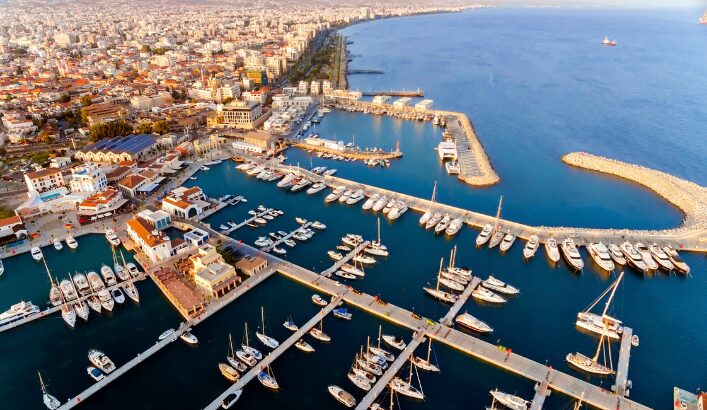
Over the last few years, outdoor recreation has exploded. More than half of all Americans now participate in outdoor activities, and millions have bought RVs and boats since 2020. Those owners are now searching for two things: somewhere to store their assets and somewhere to actually enjoy them. That’s where marinas come in. For owners of RV parks and campgrounds, marinas aren’t a totally different business—they’re a natural extension of what you already do: operating destination-driven, experience-oriented outdoor hospitality properties.
The Market Backdrop: High Demand, Limited Space
A few big forces are working in your favor:
- Outdoor participation is at all-time highs. Over 168 million Americans took part in outdoor recreation in 2022, and RV/boat ownership spiked during the pandemic.
- Space is tight. It’s several times harder to book a campsite today than it was pre-2019, and storage for RVs and boats is constrained in many markets.
- Marina supply is structurally limited. Environmental permitting, shoreline constraints, and high construction costs make it difficult to build new marinas. Even as boat sales have cooled a bit, many marinas still report strong occupancy and the ability to push rates.
In other words: demand keeps rising while high-quality waterfront space remains scarce. That’s usually a good setup for long-term owners.
Why Marinas Fit So Well with Outdoor Hospitality
Operationally, marinas and RV parks have more in common than most people realize:
- Both are land-intensive, experience-driven operating businesses wrapped around a real estate asset.
- Both rely on recurring revenue (slip or berth rent, RV pad rent, seasonal/annual contracts).
- Both can capture ancillary income from F&B, retail, rentals, fuel, repairs, events, storage, etc.
- Both serve a similar lifestyle guest—someone who values time outside, traveling, and experiences over things.
You already understand the core levers: occupancy, average daily rate, mix of transient vs. seasonal guests, and amenity-driven upsell. A marina simply shifts the setting from “pads and pull-throughs” to “slips and dry storage,” while keeping the same fundamental playbook.
The Marina + RV Hybrid: Building a True Destination
Some of the most compelling opportunities sit at the intersection of marinas and campgrounds:
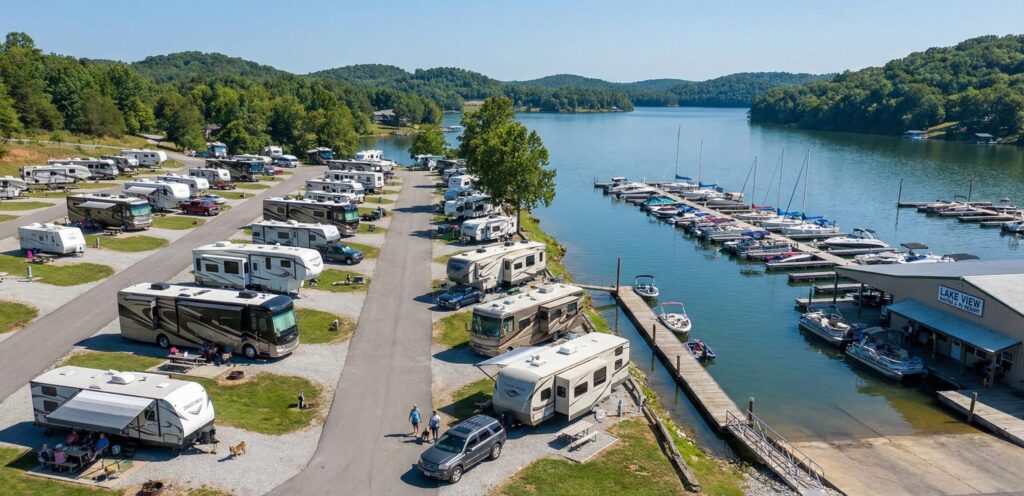
- A waterfront park where RV guests can rent a boat or book a fishing charter for the weekend.
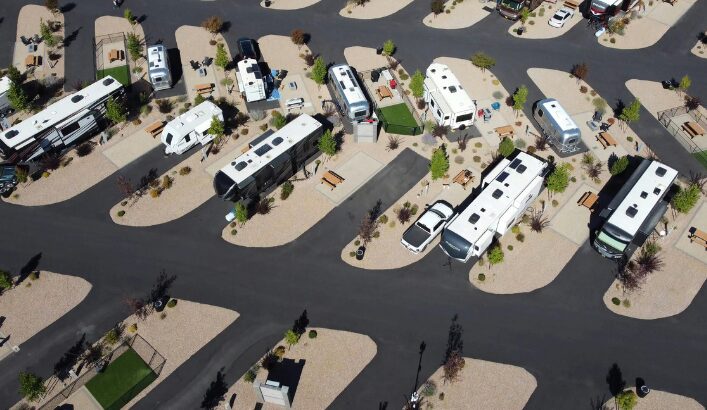
- A marina that adds RV pads, cabins, and glamping units on surplus land to capture non-boating guests.
- A property with a restaurant, pool, boat rentals, kayak/SUP rentals, and golf car rentals serving both boaters and campers.
The article’s example of Dennis Point Marina & Campground in Southern Maryland illustrates this model: 80+ deep-water slips and more than 100 RV sites under one flag, with restaurant, pool, and multiple rental offerings. The buyer there acquired not just a marina or a campground, but a waterfront destination with upside on both sides of the business.
For an RV park or campground owner, this kind of hybrid can:
- Increase length of stay and spend per guest
- Smooth seasonality between boating and camping patterns
- Create a differentiated asset that commands premium pricing
Adding RV Sites to an Existing Marina
If you already own or are considering a marina, adding RV pads can be a relatively efficient way to unlock value on under-utilized land—if the site cooperates. Two key constraints show up over and over:
- What does current zoning allow in terms of RV sites, campground use, cabins, and park models?
- Will you need a zoning change, conditional use permit, or variance? How long does that typically take in your jurisdiction?
- Can existing septic infrastructure handle the additional RV sites, or will you need to design and build new capacity?
- Do water, power, and road access support the guest experience you want to deliver?
Beyond those, the strategic question is: What kind of destination are you trying to create? Are you targeting:
- Weekend visitors from a nearby metro
- Seasonal boaters who want an RV pad or cabin alongside their slip, or
- Long-haul RV travelers who want a “must-stop” waterfront waypoint?
Your site plan, amenity mix, and capital stack should match that decision.
What’s Different (and Riskier) About Marinas
While the operational logic feels familiar, there are some marina-specific issues first-time buyers need to respect:
Seawalls, bulkheads, docks, and pilings have their own maintenance and replacement cycles—and they’re not cheap. You’ll want inspections and a capital plan from a structural engineer who knows marina assets.
Fuel docks, in-water work, dredging, and shoreline protection pull you into EPA and U.S. Fish & Wildlife rules, among others. You need clarity on what you can and can’t do before you underwrite expansions or major upgrades.
Boating accidents, storm surge, dock failures, and spills carry different risk profiles than a land-only RV park.
This is where having the right advisory and brokerage team matters: you don’t want to discover a seven-figure seawall problem after closing.
How North Star Brokerage & Advisory Can Help
At North Star, our focus is the outdoor hospitality ecosystem—RV parks, mobile home communities, campgrounds, self-storage and boat/RV storage, and increasingly, marinas and marina-adjacent assets.
Here’s how we can support park owners exploring the marina space:
Strategic portfolio review.
Is a marina or marina/campground hybrid a fit for your goals, timeline, and risk profile?
Market and property sourcing
Identify waterfront assets that can support RV pads, cabins, or expanded OH operations.
Underwriting & value-creation planning
Model out slip rates, RV pad expansion, amenity upgrades, and NOI growth with realistic capex assumptions.
Transaction execution
Run a targeted process designed to secure multiple qualified offers—whether you’re exiting a marina, acquiring your first one, or trading into a hybrid destination via 1031 exchange.
If you own an RV park, campground, or outdoor hospitality asset and you’re wondering whether a marina—or a marina + RV hybrid—belongs in your long-term plan, we’re happy to talk through it with you.
Reach out to North Star Brokerage & Advisory for a confidential conversation about:
- Evaluating marina opportunities in your target markets
- Converting or expanding existing sites into true waterfront destinations
- Structuring tax-efficient trades, including 1031 exchanges, into or out of marina assets
You already know how to operate great outdoor hospitality properties. The water might just be your next frontier.
Previous Post
Campground & RV Park Development Outlook: What New Supply Means for Owners, Buyers & Investors
Next Post
How to Set Your Rates at Your RV Park, Campground, Marina, MHP or Storage Property