
On October 8, 2026, the Clarendon City Council voted unanimously to create an RV park license that must be renewed every year. The vote followed months of discussion, and it puts this small Panhandle town ahead of most of Texas in how closely it oversees RV parks once they are open. If you own, operate, or plan to buy an RV park in Texas, this is worth understanding, because the same pressures that drove Clarendon's decision are showing up in other towns. (Clarendon Live)
What Clarendon Approved
The new ordinance does three main things:
- Creates an RV park license that is renewed every year.
- Adds spacing requirements for RV sites.
- Sets harsher penalties for violations involving fire, safety, zoning, and public health or sanitation.
RV parks in Clarendon were already limited to commercial and industrial zones, so the new rules build on an existing zoning restriction rather than replacing it. (Clarendon Live)
One important point: Clarendon has not published its license fees, renewal fees, or fine amounts. Any figure you see attributed to Clarendon should be confirmed directly with the city before you rely on it.
What the Earlier Draft Signaled
A draft presented on July 23 was based on the City of Claude's ordinance plus parts of a draft from Memphis. It covered spacing between units, a ban on open fires, commercial utility and trash accounts, permits to build plus annual licenses to operate, and fencing. (Clarendon Live)
During that discussion, officials suggested the rules would apply to new parks, with existing parks brought under them when they change hands. The article on the final vote does not confirm whether that approach made it into the adopted ordinance. For buyers and sellers, that open question matters more than almost anything else in the ordinance, and it should be answered in writing by the city before a deal moves forward.
Why Clarendon Moved Now
The driver is housing demand tied to a data center construction boom across the Panhandle. Reports point to 45 data centers expected in West Texas and 86 in North Texas. Construction crews need places to live, and RV parks are often the fastest answer. Mayor Jacob Fangman and interim city administrator Floyd Hartman have pointed to public safety, water supply, and emergency response as the reasons for tighter rules. (ABC 7 Amarillo)
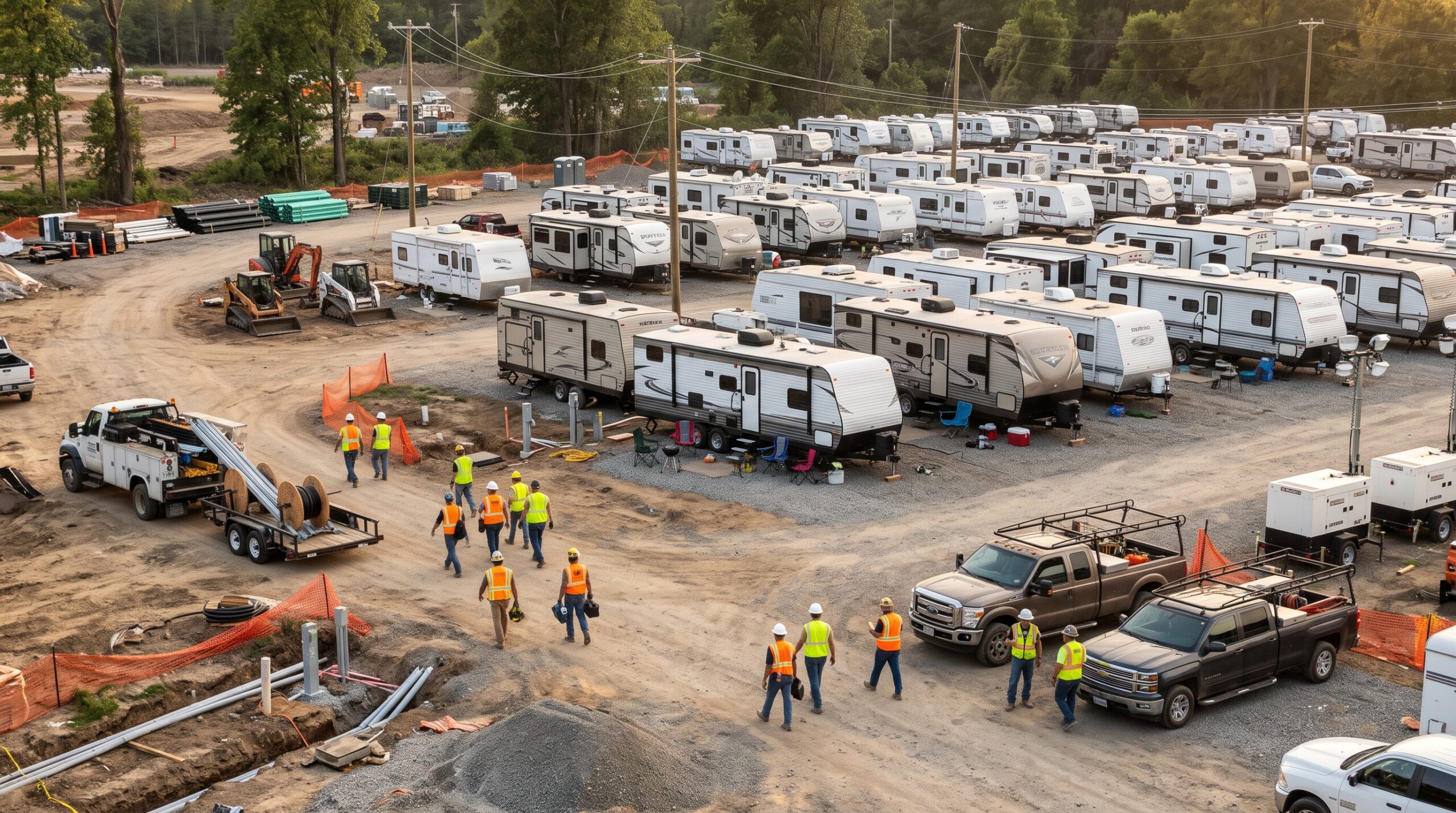
The council has also shown it intends to hold the line on zoning. On August 13, it denied a variance request to allow RVs in an R1 residential zone. The city is also considering bringing back building permits and codes that it repealed about a decade ago. (Clarendon Live)
How This Differs From the Rest of Texas
Texas has no state RV park operating license. State rules focus on environmental and utility issues instead. Depending on the park, those can include TCEQ public water system rules once a park reaches 15 or more connections or serves 25 or more people, PUC rules if water or sewer is billed separately, septic (OSSF) permits, a wastewater permit above 5,000 gallons per day, a stormwater permit when one acre or more is disturbed, and a ban on burning waste. (TCEQ)
Counties regulate RV parks under Local Government Code Chapter 232, which centers on infrastructure plans and a certificate of compliance. Fannin County's 2023 rules are a good example: a maximum of 10 RVs per acre, 24 foot streets, a fee of $150 plus $20 per space, $80 per inspection, a $5,000 engineering deposit, no utility service until the certificate is issued, and re-inspection every five years. (Fannin County RV Park Regulations)
Cities typically rely on zoning, conditional use permits, site plans, and building permits. In Wichita Falls, for example, Falls Ranch RV Resort moved forward with a rezoning plus a conditional use permit.
The pattern is clear. Most Texas rules work as a gate you pass through once, at development. Clarendon's license is ongoing. A park has to keep qualifying every year.
What Penalties Could Look Like
Texas law caps city fines under Local Government Code Section 54.001: $500 for general violations, $2,000 for fire safety, zoning, or public health and sanitation violations, and $4,000 for dumping. These caps are the likely ceiling for Clarendon's penalties. They are not confirmed Clarendon figures.
What Other Texas Towns Have Done
Clarendon is not the first Texas city to license RV parks. Two examples show what an annual license can look like in practice.
Aransas Pass, Ordinance 4113 (2015). (City of Aransas Pass)
- Licenses expire September 30, with a $25 per week late fee.
- Parks with 1 to 50 spaces pay $250 for a license, $100 to renew, and $50 to transfer. Parks above 50 spaces pay $500, $200, and $100.
- At least one unannounced inspection a year.
- Fines up to $500 per day, or $2,000 per day for fire, zoning, or health violations.
- 10 feet between RVs, sites of at least 1,750 square feet and 25 feet wide, a maximum of 20 sites per acre, and a 6 foot screening fence.
- Existing parks are exempt until sold. The new owner then has 90 days to comply.
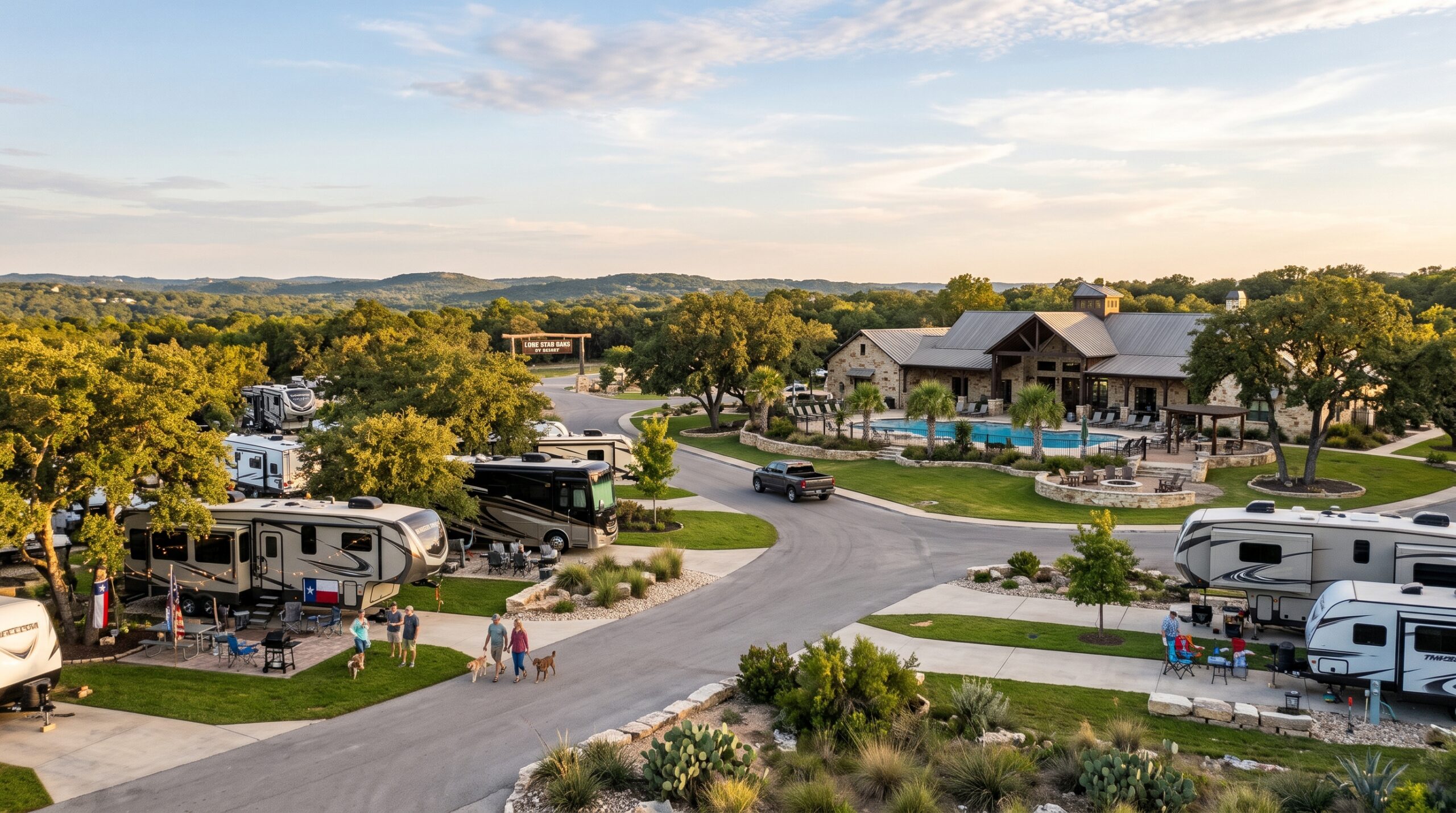
Hallettsville.
$25 per year plus $2 per space, renewal due July 1, and a $25 transfer fee. (Hallettsville Code)
What This Means for a Sale
A license tied to the operator, rather than to the land, can turn a sale into a compliance event. The Aransas Pass model shows how that works: a park that has operated for years under older rules suddenly has 90 days to meet current standards once it changes hands. If Clarendon or a neighboring town takes a similar approach, a buyer could inherit spacing, fencing, utility, or site size upgrades on day one.
That cost belongs in the purchase price, not in the buyer's first year budget.
Sellers should expect informed buyers to ask about it, and they should be ready with answers.
Takeaway Checklist
For buyers:
- Get the ordinance in writing and confirm whether a sale or license transfer triggers compliance for existing parks.
- Confirm the current license fee, renewal date, transfer fee, and fine schedule directly with the city.
- Measure spacing, site sizes, fencing, and density against the current rules.
- Price required upgrades into your offer and timeline.
- Verify TCEQ, PUC, septic, wastewater, and stormwater status separately from city rules.
For owners and sellers:
- Keep your license current and your renewal records organized.
- Document inspections and corrections.
- Know which rules apply to you now and which apply to your buyer.
- Watch other Panhandle towns facing data center workforce housing demand, since similar ordinances may follow.
If you are buying, selling, or operating an RV park in a town that is tightening its rules, talk with North Star before you make your next move.
Start the Conversation
This article is for general informational purposes and reflects conditions as of publication. It is not legal advice. Ordinances change, and figures attributed to other municipalities should be confirmed directly with the city before you rely on them. Consult a qualified attorney before making decisions based on any regulation described here.